Why Home Ownership in Nigeria Still Feels Out of Reach — And What Is Changing
Millions of capable Nigerians are locked out of home ownership — not for lack of ambition, but because the system was never designed to include them. Here is why, and what is changing.
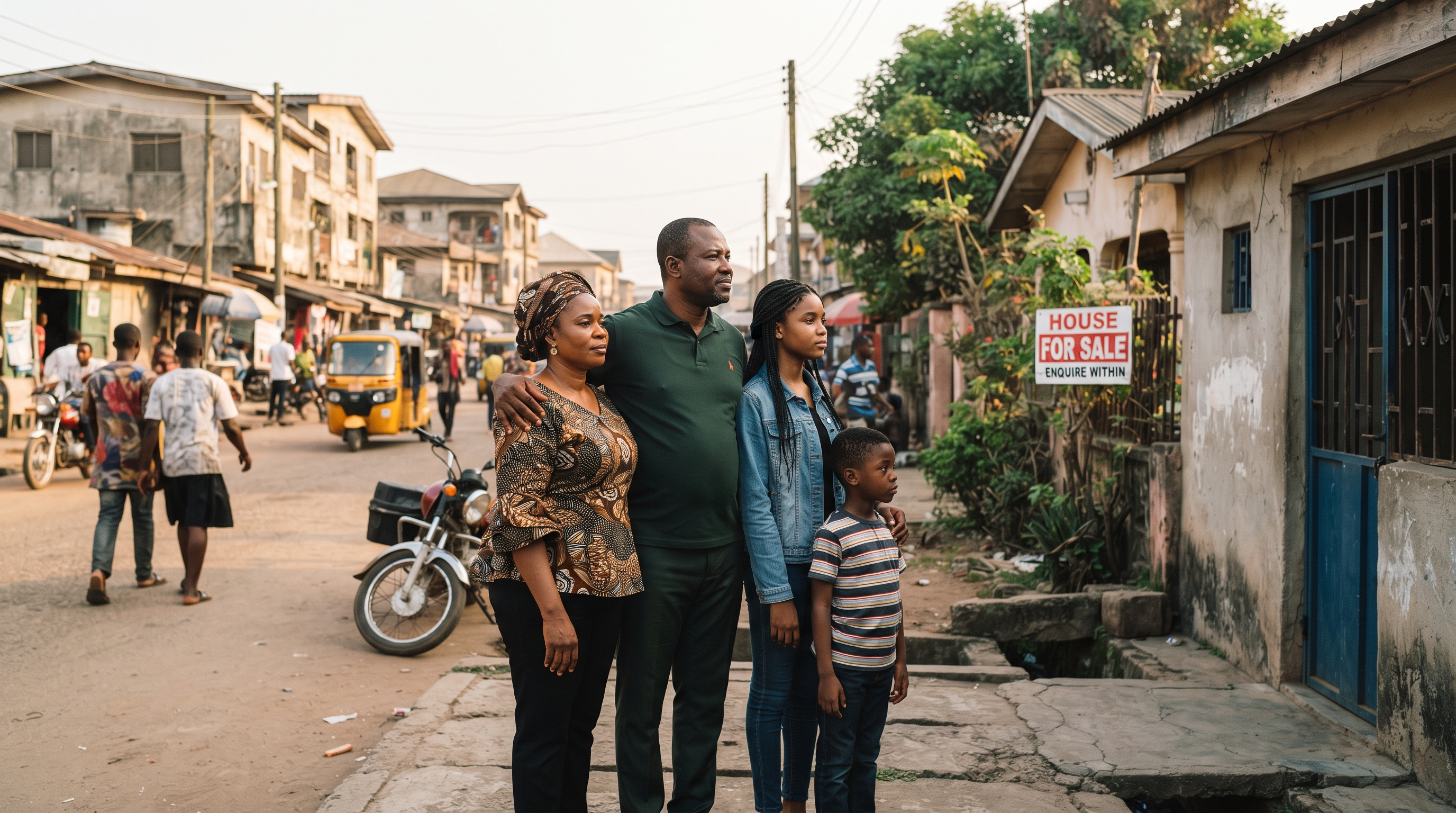
Imagine you save for 10 years. Every month, a little goes aside. You skip the extra holiday. You turn down the restaurant dinner. You tell yourself: this year, this year we will have enough.
And then you look at what land costs in Abuja, and your savings — ten years of discipline — don't even cover the plot. Just the empty land. Before a single brick is laid.
This is not a story about laziness or lack of ambition. This is the story of millions of working Nigerians who did everything right and still found the door closed.
So why is it this hard? And is anything actually changing?
The three walls that keep people out
The first wall is land. In Nigeria, the way things have always worked, you cannot own a home without first owning the land it sits on. And land — especially in cities like Abuja, Lagos, and Port Harcourt — is extraordinarily expensive. In Abuja's prime areas, a plot of land can cost ₦50 million, ₦80 million, even ₦200 million. That is before you build a single room.
Most working Nigerians — teachers, nurses, civil servants, young professionals — earn between ₦200,000 and ₦600,000 a month. Even if you saved every single naira for a decade, you couldn't buy a plot in the right part of town. The land cost alone is a lifetime's earnings.
The second wall is the mortgage system. In many countries, you can buy a home with a mortgage — a loan from a bank that you pay back slowly over 20 or 30 years. In Nigeria, this system exists on paper. But in practice, it doesn't work for most people. Banks ask for a large deposit upfront — sometimes 30% of the property value. They want years of payslips and salary records. They want a credit score. And then they offer an interest rate of 20%, 25%, or higher. Most people don't qualify. Most who qualify can't afford the payments. The people who need the system most are the people it excludes.
The third wall is quality. Affordable housing in Nigeria has, for too long, meant something that looks affordable. Cracked walls. Unpaved roads. No consistent water. Generators as the only power source. Communities with no green space, no governance, no sense of belonging. Dignity should not be a luxury.
What is actually changing
Something is shifting. Not everywhere. Not fast enough. But it is real.
A small number of developers and platforms are beginning to think differently. Instead of asking how do we build the cheapest possible houses, they are asking how do we make dignity accessible.
The big idea that is changing everything is this: you do not need to own the land to own the home.
In the United States, the United Kingdom, the Netherlands, Australia — millions of people own their homes and lease the land beneath them. They pay a monthly or annual land fee, called lot rent, to whoever owns the land. They own the home itself. They can sell it, pass it to their children, renovate it. The home is theirs.
At the same time, a new kind of ownership is emerging for people who cannot pay a lump sum: rent-to-own. Instead of renting and walking away with nothing at the end of the year, you rent — but every payment chips away at your ownership stake. After a few years, you own the home outright.
Why this matters right now
Nigeria's housing deficit is over 17 million homes. It is one of the largest housing gaps on earth. The answer is not more mass housing estates that nobody wants to live in. The answer is a new system — one that starts with the human being, not the land title.
That system is beginning to exist. It is imperfect and early. But it is real. And for millions of Nigerians who have been saving and hoping and waiting, the door that was always locked is beginning to open.