How Solar Independence Works in a Micro Haven Home
Every Micro Haven home comes with its own solar panel, battery, and inverter. Here is what that means for your daily life — and why it matters.
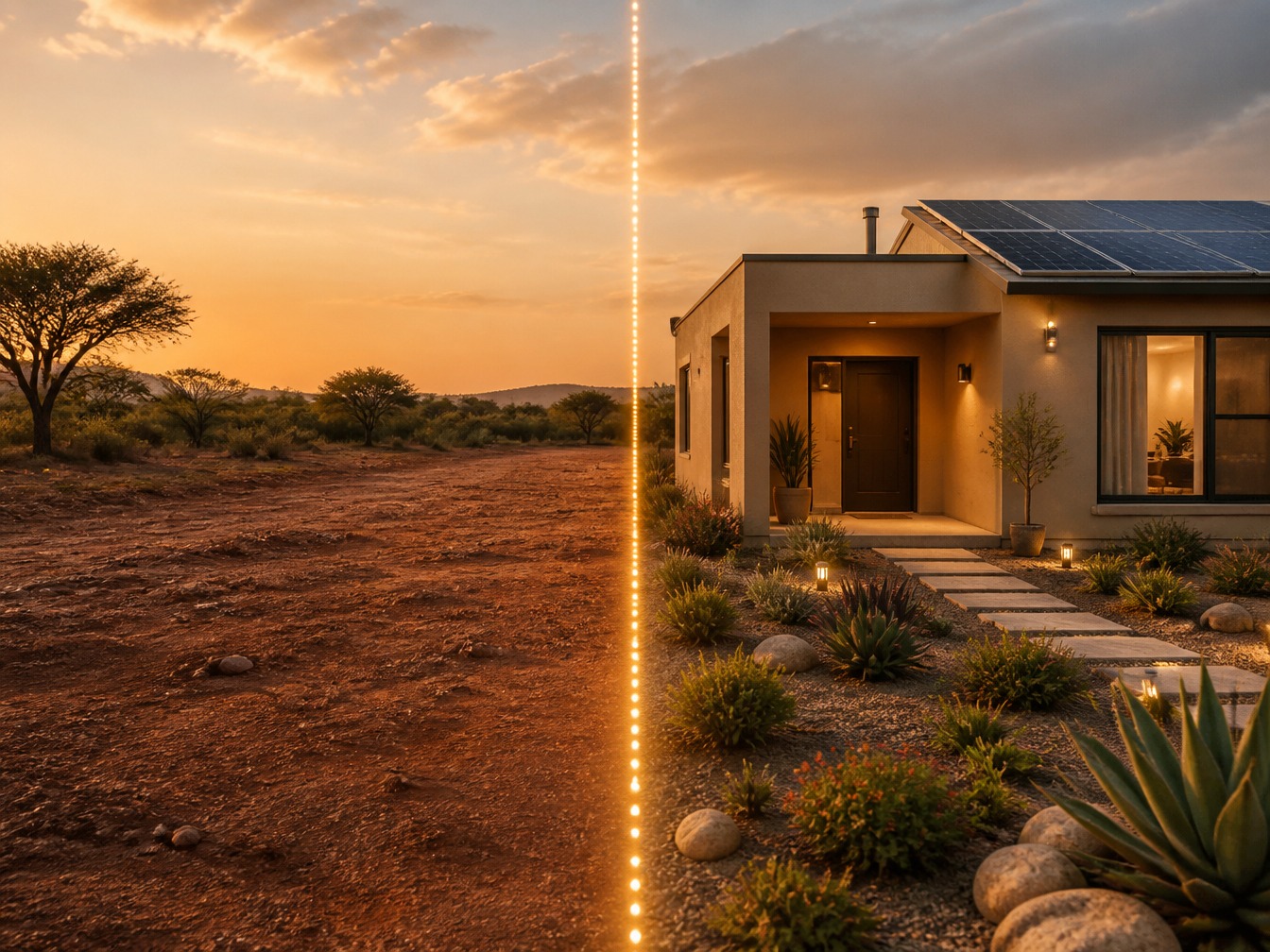
Power should not be a daily negotiation.
In much of Nigeria, electricity is something you plan your life around. You charge what you can when the grid is up. You budget for fuel. You listen for the generator next door and hope yours starts too.
Every Micro Haven home is designed so that this is not your daily reality. Each unit is delivered with its own solar panel array, battery storage, and inverter — fitted to the home, not shared with a compound or a neighbour.
What "independent" actually means
Independence here is literal: the system belongs to the home. If you move the home to another lot, the power system moves with it. You are not connected to a landlord's meter, not splitting a bill, and not waiting for someone else to buy diesel.
What the system runs
A Micro Haven solar setup is sized for everyday living, not for heavy industrial load. Lighting, fans, phone and laptop charging, a television, and a small fridge are all normal daily use. High-draw appliances such as electric cookers, water heaters, and air conditioning need to be discussed at specification stage — they change the sizing of the panels and battery.
What happens at night and in the rainy season
The battery is the point. Panels charge it through the day; you draw from it at night. In extended overcast weather the battery holds less, so usage matters — the same way it does with any off-grid system. Homes can also be wired to accept grid power where a lot has a supply, so solar becomes your primary source rather than your only one.
Maintenance
Panels need cleaning. Batteries have a service life and eventually need replacing. Both are straightforward, and both are yours as the home owner. Where a home sits on a Haven Lots™ (plot-matching marketplace) plot, Maryland Real Estate Services can coordinate access for servicing so you are not negotiating that directly with the compound owner.
Why it matters beyond the bill
A home that makes its own power is a home that can sit almost anywhere. That is what makes the Micro Haven model work: the unit does not depend on where the nearest reliable grid connection happens to be. Ownership stops being tied to infrastructure you cannot control.